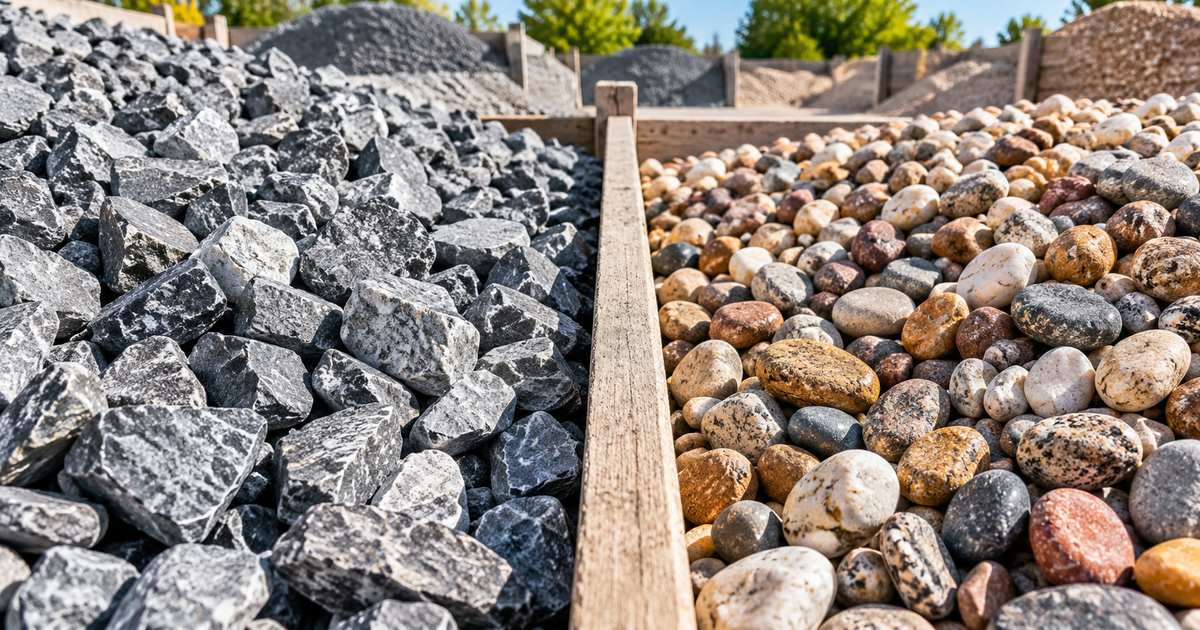
Crushed stone vs gravel is not simply a choice between two names for the same rock. Crushed stone usually has fractured, angular faces created by mechanical crushing. Natural gravel often has smoother, more rounded particles, although suppliers may also crush gravel. The best material depends on whether you need a stable base, drainage, a walking surface or decorative coverage.
For a driveway base, particle grading and the ability to compact often matter more than appearance. For a drainage trench or decorative bed, the void spaces between clean particles may matter more. A supplier’s product description and specification are more reliable than choosing by the color or size of a pile.
Comparing rounded landscape stone? Read pea gravel vs river rock for coverage, walkability and ordering differences. For a specific drain, also check the French drain gravel guide and its material-selection limitations.
Crushed Stone vs Gravel: What Makes Them Different?
Crushed stone is made by breaking rock into smaller pieces. Its particles typically have flat or angular fractured faces. Natural gravel comes from deposits such as riverbeds or other geologic materials and can contain rounded stones, sand and mixed sizes. A local yard may still call its crushed gravel ‘gravel,’ so the names overlap.
The U.S. Geological Survey treats crushed stone and construction sand and gravel as distinct commodity reporting categories. That distinction is useful, but it does not define the installation performance of every product a homeowner can buy.
Look at three practical features: particle shape, gradation and cleanliness. Gradation describes the range of particle sizes in a blend. ‘Clean’ often means the product has little fine material, but ask for the actual specification rather than relying on the word alone.
Angular shape can help a base lock together
Angular particles have sharper edges that may interlock with neighboring pieces. Rounded stones tend to roll and shift more freely when unsupported. The Federal Highway Administration’s granular-base discussion notes that angular, durable particles and appropriate grading support base stability.
That does not mean crushed stone always makes the best surface. A driveway may benefit from a well-compacted dense-graded base, while a planting bed may use rounded decorative gravel because the surface does not carry heavy traffic. The project’s purpose should lead the material choice.
Stone shape also affects how comfortable a path feels underfoot and how readily loose surface rock moves. A small, angular aggregate may stay in place better than smooth pea gravel in some layouts, but accessibility, edging and the compacted foundation still influence the final result.
Gradation often matters more than the label
A dense-graded mix contains a range of larger and smaller particles. Fine material fills some spaces between the larger rocks, helping the aggregate form a compactable layer. An open-graded mix has relatively fewer fine particles and more connected void space, which can support water movement when the drainage system is designed for it.
The FHWA guidance on granular bases explains that gradation influences pavement stability, permeability and frost susceptibility. A product described only as ‘three-quarter-inch stone’ does not tell you whether it contains fines or what installation function it is intended to serve.
Ask the supplier for its sieve grading or a product sheet when performance matters. Two piles can contain similarly sized top particles while having very different amounts of dust or smaller chips. That difference affects compaction, drainage and surface texture.
Choosing for a driveway or parking area
A driveway must support repeated vehicle loads and direct water away from vulnerable areas. For many driveways, the base material needs controlled grading and compaction, while the visible surface may use a different product. A loose clean stone alone should not automatically be treated as a complete driveway system.
Look for a material specified for the actual base or surface role. Crusher run and other dense-graded aggregates are common terms for mixes containing fines, but names and available grades vary by region. Ask the yard which specification a product meets rather than assuming every ‘crusher run’ pile is interchangeable.
The site preparation is equally important. Soft soil, poor drainage, a steep grade and the presence of heavy vehicles can change the thickness and makeup of the entire driveway. Use a contractor or relevant local specification for major construction rather than deciding the design from a shopping guide.
Choosing stone for drainage
Drainage projects use a combination of grading, void space, outlet design and filtration. Clean, appropriately graded crushed stone is frequently used around drains, but the right size and arrangement depend on the drainage system. A rounded gravel may also serve certain drainage applications if it meets the required specifications.
Do not assume that putting coarse stone in a wet hole will solve standing water. Water still needs a suitable path away from the area, and surrounding fine soil may clog an unprotected stone layer. Drain pipe, filter fabric, soil conditions and safe discharge locations require project-specific attention.
For retaining walls, drainage behind the blocks is a structural concern, not just a landscaping detail. The Concrete Masonry & Hardscapes Association’s retaining-wall design guidance describes the importance of drainage fill and water management. Follow your wall system’s design and use qualified help where needed.
Choosing gravel for a path or landscape bed
For paths, consider stability, comfort, accessibility, slopes and how the stone stays within its edges. Rounded pea gravel has a different feel from angular crushed stone and can move underfoot. A firm, stable accessible route may call for a different surface assembly than a decorative garden trail.
For planting beds, focus on appearance, weed management, maintenance, edging and compatibility with the landscape. Both crushed stone and natural gravel can be used decoratively. Confirm the stone size and the type of underlying soil or fabric arrangement before planning coverage.
Color may vary by quarry, even when the rock type is similar. If matching existing material matters, inspect an actual sample in daylight. A photograph on a supplier’s website is useful for a first look but not always reliable for a final color decision.
Compare cost by delivered usable quantity
Neither crushed stone nor gravel has one nationwide price. Costs depend on quarry location, processing, size or gradation, order size and freight. The closest pile is not always the best product, but long hauling distances can change the delivered budget substantially.
Ask for the exact selling unit. A cubic yard is volume, while a US short ton is weight. Since loose bulk density differs, a price per yard and a price per ton cannot be compared fairly without a material-specific conversion. The Stone Cost Calculator lets you enter the actual quote and compare the project budget.
Also ask whether the supplier sells full truckloads, partial loads or bagged stone. A small decorative project may make bagged material convenient, while a larger base project may call for bulk delivery. Compare the total billed quantity and delivery charge, not just the shelf price per bag.
Measure quantity after selecting the product
Calculate project volume with length × width × installed depth, keeping all measurements in compatible units. One cubic yard is 27 cubic feet. For irregular areas, split the space into rectangles, circles or triangles and add the volumes. The Stone Cubic Yards Calculator provides a direct way to check the math.
If you will buy by weight, obtain a loose bulk density or weight-per-yard figure for the chosen product. Do not use a solid rock density for an aggregate delivery. Add cutting, spillage or compaction adjustments only where your supplier or contractor can support them.
Finally, plan unloading and storage. Avoid mixing clean drainage stone with muddy soil, which can change its grading and performance. Keep separate materials in separate piles and mark the intended placement zones before the truck arrives.
Make the selection with a short checklist
- What is the stone’s job: load support, drainage, surface or decoration?
- Is the material crushed and angular, rounded, or a mix?
- What particle sizes and fines are included?
- Is the product specified for this application?
- Will the stone be used loose or compacted?
- What is the delivered price and unit of sale?
These questions make a conversation with the quarry more productive than simply asking for ‘a load of gravel.’ They also help prevent ordering a visually similar material that performs differently once installed.
FAQs: Crushed Stone vs Gravel
Q. Is pea gravel the same as crushed stone?
A. Usually not. Pea gravel is commonly rounded and small, while crushed stone is typically angular from processing. Product naming still varies locally.
Q. Does crushed stone always drain better?
A. No. Drainage depends on grading, fines, void space, filters and water outlets, not simply whether particles were crushed.
Q. Is crusher run a type of gravel?
A. It is generally a dense-graded crushed aggregate blend with fines. Ask for the exact local product grading and intended use.
Q. Which is easier to compact?
A. A suitable dense-graded aggregate is designed to form a compacted layer. Actual compaction depends on moisture, equipment, material grading and site conditions.
Conclusion
For crushed stone vs gravel, choose by the product’s job and specifications rather than the name alone. Check particle shape, gradation and delivery units, then use the Crushed Stone Calculator to estimate the quantity for your selected material.
Disclaimer
This article is general educational information, not a design for roads, driveways, drainage or retaining structures. Material performance and installation requirements vary. Consult product specifications and qualified professionals for construction decisions.